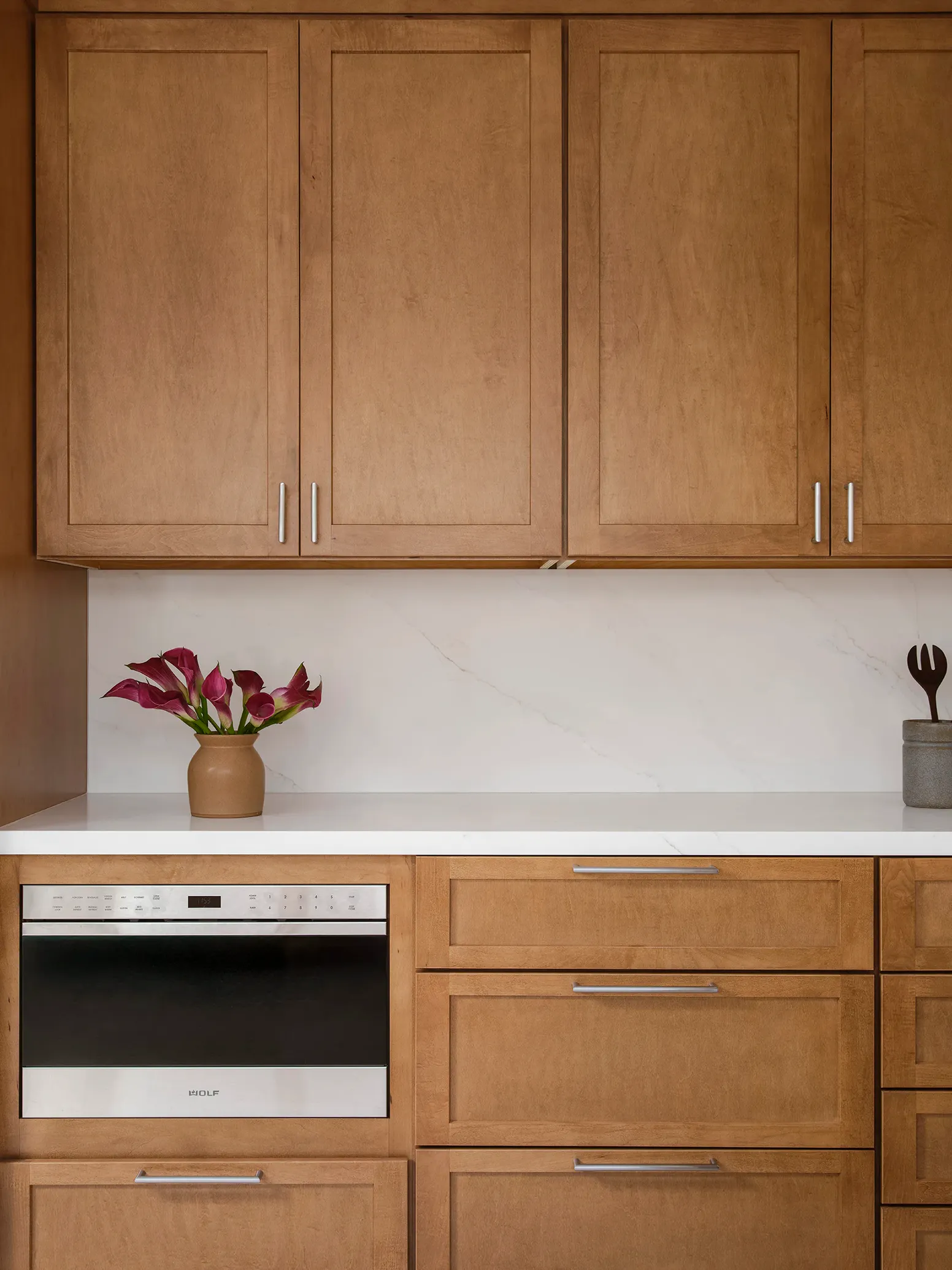
2cm vs 3cm Countertops: What’s the Difference and Which Is Better?
January 22nd, 2026When choosing countertops, one of the most common decisions homeowners face is 2cm vs 3cm slab thickness.
On paper, the difference seems small. In real homes, it influences how a kitchen feels, how it’s built, and how it holds up to everyday life.
Both options are widely used in modern kitchens. The right choice depends less on which one is “better” and more on how the space will be used, how visible the edges are, and how the countertop is supported.
What does 2cm vs 3cm actually mean for countertops?
- 2cm countertops are approximately ¾ inch thick
- 3cm countertops are approximately 1¼ inches thick
That additional thickness affects:
- structural support requirements
- edge fabrication methods
- overhang limits
- visual weight and presence
While samples in a showroom may look nearly identical, these differences become more noticeable once the countertop is installed and lived with.
Structural support and installation differences
3cm countertops
3cm slabs are thicker and inherently stronger. In most residential kitchens, they can be installed directly on top of cabinetry without plywood underlayment.
This results in a simpler installation with fewer layers, which often means cleaner detailing around sinks, ranges, and cabinet edges.
Because of their strength, 3cm slabs are commonly used for:
- kitchen islands
- peninsulas
- overhangs
- waterfall edges
They are often chosen in kitchens that see frequent use and where the island becomes a central gathering point.
2cm countertops
2cm slabs are thinner and more flexible, which means they typically require plywood underlayment for proper support.
That plywood is concealed during installation, and the exposed edge is usually laminated or mitered to create the appearance of a thicker countertop.
When installed correctly, 2cm countertops perform well in residential kitchens. However, because more components are involved, details like edge construction, seam placement, and support become more important.
Strength and durability in everyday use
Durability concerns often come up in family homes where kitchens are used constantly throughout the day.
Islands become places where kids sit while breakfast is made, where people lean during conversations, and where backpacks, groceries, and school projects end up resting. Over time, countertops are leaned on far more than they are struck.
When fabricated and installed properly, both 2cm and 3cm quartz countertops are durable enough for normal household use. Daily activities like leaning, food prep, and routine wear do not pose a problem for either thickness.
The difference lies in how that durability is achieved.
With 3cm slabs, strength comes directly from the thickness of the material. With 2cm slabs, strength comes from the combination of plywood support, edge build-up, and proper installation.
In practical terms, issues are far more likely to come from improper support or poor fabrication than from slab thickness alone.
Overhangs: where real-life use matters most
Overhangs are one of the most common areas of concern, especially in kitchens with breakfast bars or peninsulas.
These are the spots where kids lean while eating, where stools get pushed in and out, and where family members naturally gather during busy mornings or casual meals.
Typical manufacturer guidelines (which vary by brand and material):
- 3cm quartz can often span 12–14 inches without additional support
- 2cm quartz typically supports shorter overhangs, often around 8 inches, unless brackets or corbels are added
Both options can be engineered to work safely. However, longer overhangs often favor 3cm slabs because they reduce the need for visible supports and simplify long-term performance in active households.
Edge profiles and visible seams
Edge detailing is one of the most noticeable visual differences between 2cm and 3cm countertops, particularly in kitchens where edges are exposed on multiple sides.
2cm countertops
Because the slab itself is thinner, most 2cm installations rely on laminated or mitered edges to create the appearance of a thicker countertop.
When carefully detailed, this can look clean and intentional. However, seams may become more noticeable in areas such as:
- peninsulas with wraparound edges
- outside corners
- undermount sink cutouts, where the thinner slab is visible from below
In kitchens where these areas are heavily used and frequently seen, seam placement and fabrication quality play a significant role in how the countertop is perceived over time.
3cm countertops
With 3cm slabs, the thickness is real rather than built up. This allows for:
- simpler edge profiles
- fewer visible seams
- cleaner transitions at sinks and appliances
For homeowners who prefer a more substantial look with fewer visual details to manage, 3cm countertops are often the more straightforward option.
Cost considerations: material price vs installed cost
At first glance, pricing can be misleading.
- 2cm slabs are typically less expensive per slab
- 3cm slabs cost more upfront
However, 2cm installations often include:
- plywood underlayment
- laminated or mitered edges
- additional fabrication labor
Once all installation components are considered, the total cost difference between 2cm and 3cm countertops is often smaller than expected.
For many homeowners, the decision comes down to design preference rather than price alone.
Quartz vs natural stone thickness
Both quartz countertops and natural stone countertops (including granite, marble, and quartzite) are commonly available in 2cm and 3cm thicknesses.
In practice:
- 3cm quartz is the most common choice in modern kitchens
- natural stone often benefits from added thickness for both strength and visual presence
- waterfall edges and bookmatched slabs typically favor 3cm material
That said, many contemporary and European-inspired kitchens intentionally use 2cm slabs for a lighter, more streamlined appearance.
A detail often overlooked: slide-in ranges
One practical consideration that frequently gets missed during planning is how countertop thickness interacts with slide-in ranges.
Most ranges are manufactured to sit at approximately 36 inches before leveling. Thinner countertops can make height differences between the range and countertop more noticeable if cabinet heights are not adjusted accordingly.
This can be addressed during cabinet installation, but thicker countertops tend to conceal these differences more easily.
Which countertop thickness makes sense?
3cm countertops are often preferred when:
- islands or overhangs are a focal point
- edges are highly visible
- a simpler installation is desired
- minimizing edge build-up is a priority
2cm countertops can be a good choice when:
- a specific color or design is only available in 2cm
- a lighter, more minimalist look is intentional
- edges are thoughtfully detailed
- overhangs are modest or properly supported
Frequently Asked Questions About 2cm vs 3cm Countertops
1. What is the difference between 2cm and 3cm countertops?
The main difference between 2cm and 3cm countertops is thickness. A 2cm slab is approximately ¾ inch thick, while a 3cm slab is about 1¼ inches thick. That extra thickness affects how the countertop is supported, how edges are fabricated, and how substantial the countertop looks once installed.
2. Is 2cm or 3cm better for kitchen countertops?
Neither option is universally better. 3cm countertops are often preferred for kitchen islands and highly visible areas because they require fewer support layers and have a more substantial appearance. 2cm countertops can work well when properly supported and detailed, especially when a specific color or design is only available in that thickness.
3. Are 3cm countertops stronger than 2cm?
Yes, 3cm countertops are inherently stronger because of their thickness. However, when 2cm countertops are installed with proper plywood support and edge construction, both options are durable enough for normal residential kitchen use. Installation quality and material brand matter more than thickness alone.
4. Are 2cm countertops durable enough for family kitchens?
When installed correctly, 2cm countertops are durable enough for busy family kitchens. Daily activities such as food prep, leaning, and normal wear do not pose an issue. For households with heavy use at islands or overhangs, proper support and edge detailing are especially important.
5. Can kids lean or sit on a 2cm countertop overhang?
For modest overhangs, 2cm countertops can safely handle everyday use when supported according to manufacturer guidelines. Longer overhangs may require brackets or corbels to provide additional reinforcement. Thicker slabs often allow for longer unsupported overhangs with fewer visible supports.
6. Do 2cm countertops need plywood underneath?
In most cases, yes. 2cm countertops typically require plywood underlayment to provide adequate support and reduce flexing. The plywood is concealed during installation and allows the countertop to perform properly over time.
7. Are 3cm countertops more expensive than 2cm?
3cm slabs usually cost more per slab than 2cm material. However, 2cm installations often include added costs for plywood, laminated edges, and additional fabrication. Once fully installed, the total price difference between 2cm and 3cm countertops is often smaller than expected.
Final takeaway
The choice between 2cm vs 3cm countertops is not about durability alone. It’s about how a kitchen is used, how details are handled, and how the space will age with daily life.
- 3cm offers simplicity, visual weight, and fewer variables
- 2cm offers flexibility and design options when executed with care
When thickness, support, edge treatment, and cabinetry are considered together, both options can perform beautifully and stand up to years of real-world use in busy homes.